Cheap Leads vs Real Opportunities: What Actually Converts
Compare low-cost lead sources vs inbound opportunities that are more likely to close.
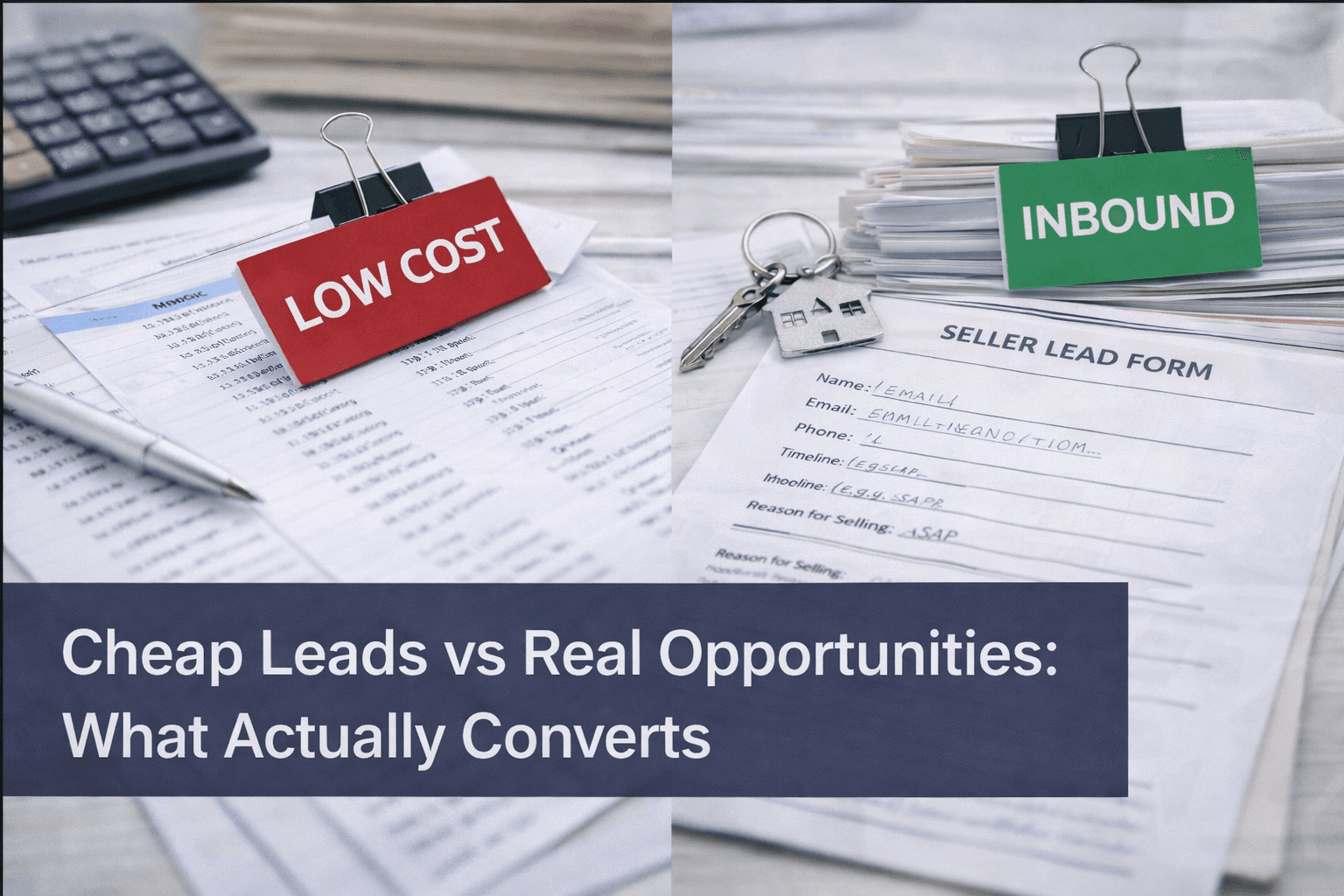
Not all leads are created equal, and understanding this distinction is critical for long-term success. Many investors are drawn to low-cost leads, assuming they provide a better return.
Cheap leads often come with hidden costs. They lack intent, require extensive follow-up, and frequently result in unproductive conversations. While the upfront cost is lower, the time investment is significantly higher.
Real opportunities come from leads that are already motivated. These sellers have taken action, expressed interest, and are more open to having a productive conversation. This creates efficiency.
The difference becomes clear when looking at cost per deal. Cheap leads may seem attractive initially, but they often require more volume to produce results. Inbound leads, while higher in cost per lead, tend to convert at a higher rate.
This shift changes how time is spent. Instead of chasing uninterested contacts, you focus on closing real opportunities. The process becomes more streamlined and predictable.
In the long run, the goal is not to acquire the cheapest leads, but to operate a system that produces consistent results. Quality leads reduce friction, improve conversations, and ultimately lead to more closed deals.
Be the first to read our articles.